

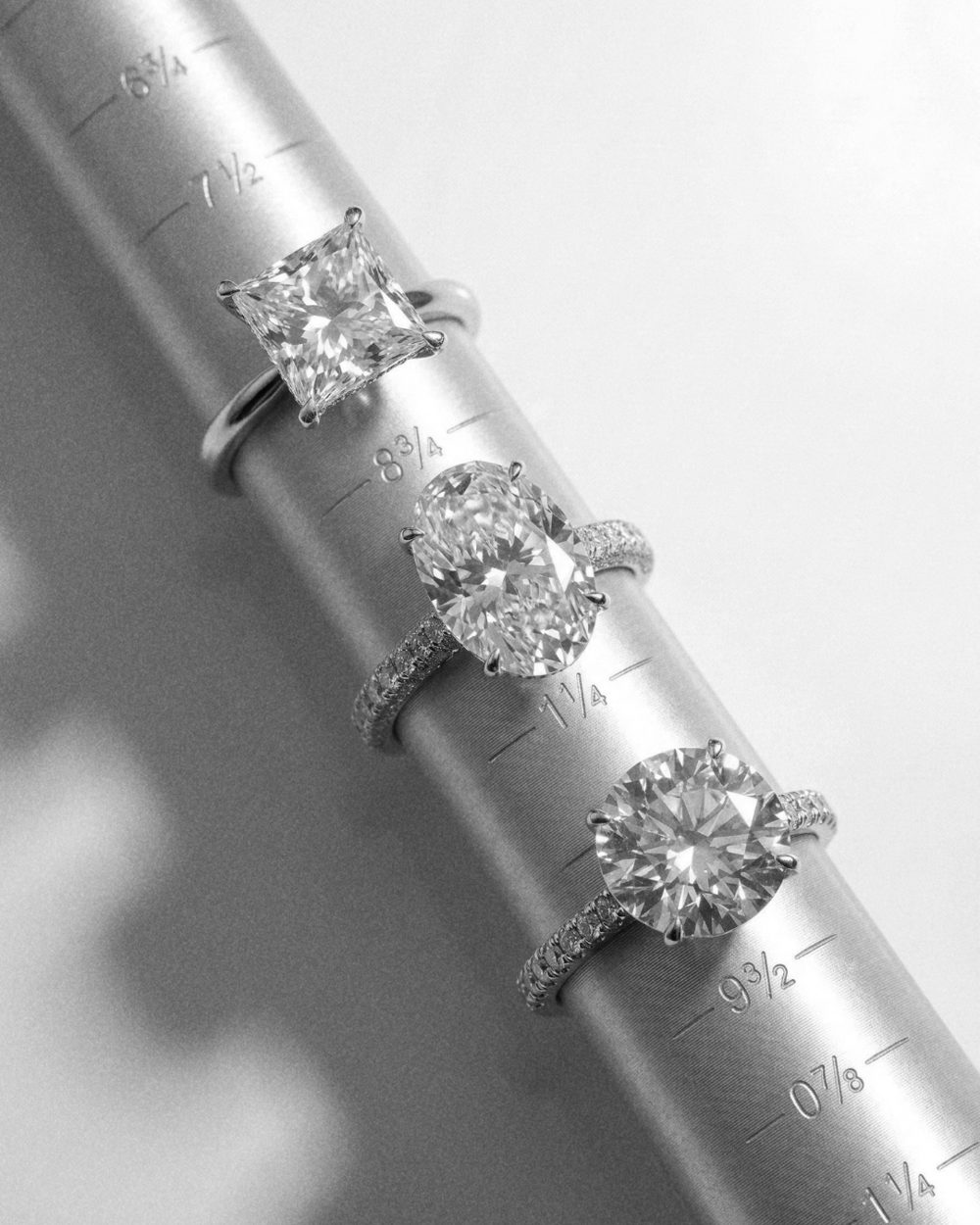
Carat
Carat is weight, not size. One carat is 0.2 grams and is divided into 100 points. Two diamonds of the same weight can look different in size depending on shape and cut: elongated shapes such as marquise and oval look larger for their weight.
Cut
Cut describes how well the facets work with light. Proportions, symmetry and polish decide brilliance, fire and scintillation, so cut has the biggest effect on sparkle. For round diamonds GIA grades cut from Excellent to Poor; for fancy shapes such as marquise, pear and emerald, labs generally grade polish and symmetry but give no overall cut grade, so a trained eye matters.
Color
Colorless diamonds are graded from D (colorless) to Z (light yellow or brown). D to F is colorless and G to J is near-colorless, which usually looks white once set, especially in yellow or rose gold. Diamonds with more color than Z belong to the fancy color category.
| Grade | Description |
|---|---|
| D – F | Colorless |
| G – J | Near-colorless |
| K – M | Faint color |
| N – Z | Very light to light color |
Clarity
Clarity measures internal characteristics and surface blemishes. The scale runs from FL (flawless) and IF (internally flawless) through VVS1, VVS2, VS1, VS2, SI1 and SI2, to I1, I2 and I3. Most inclusions cannot be seen without magnification; a VS2 to SI1 stone is often eye-clean, but each stone should be checked individually.
There is no single best C. A balanced choice usually puts cut first, then picks color and clarity that suit the metal and your budget.
Certificates
Independent laboratories such as GIA and IGI grade the 4 Cs and issue a report. We will walk you through the report for any stone you consider.